
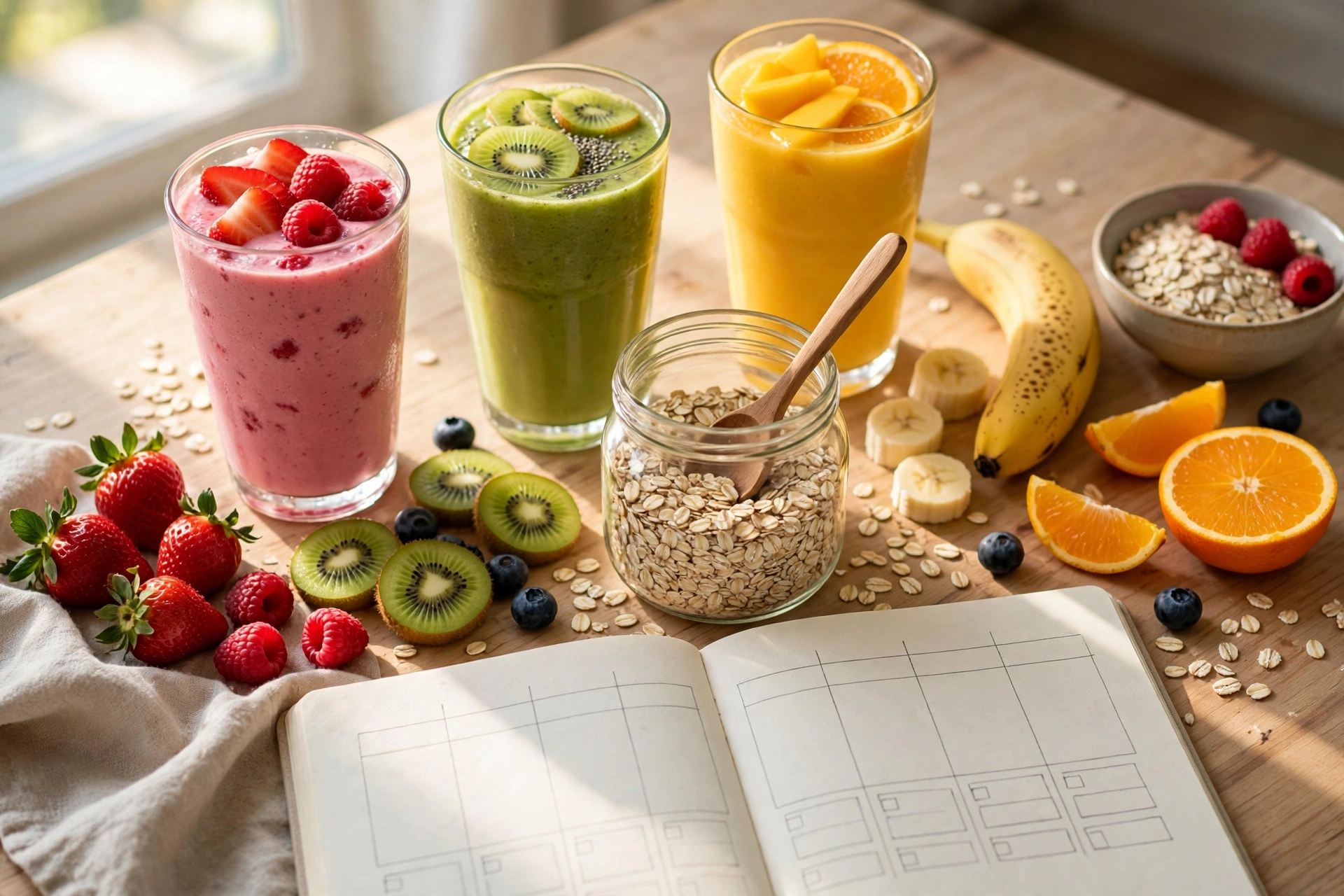
A smoothie can lift your day, or it can be a glass of sugar with fruit in it. The difference sits in what goes into the blender. Healthy smoothie recipes use whole fruit, a handful of vegetables, a source of protein and no added sugar. They add fibre to your day and help you eat more plants. They also take five minutes on a rushed morning. This guide looks at smoothies through a health lens first. It covers what makes one good for you, plus four blends. Then it shows how the same ideas stretch across a whole week of eating. Anyone with a health condition should talk to their GP before changing how they eat.
What Makes a Smoothie Healthy?
In fact, a healthy smoothie starts with whole fruit, not juice. Juice leaves the fibre behind. As a result, one glass can hold far more sugar than a single piece of fruit. Whole fruit keeps its fibre. In short, fibre slows the whole drink down in your body. That is why a berry, banana and yogurt smoothie beats a juice-based one. Not every drink with fruit in it counts among healthy smoothie recipes.
Vegetables earn their place too: spinach or cucumber adds bulk and colour. Protein matters too: milk, yogurt, nut butter, seeds or oats keep you full. Without protein, a smoothie can leave you hungry within the hour. That balance turns a drink into one of the healthy smoothie recipes worth repeating.
Watch the portion too. A glass of about 350 ml suits most people for breakfast. However, a litre jug holds a lot of fruit at once, even when every ingredient looks healthy. So keep the glass modest and drink it slowly. Fibre gives your gut bacteria something useful to work on. You can read more about how fibre helps your gut.
Four Healthy Smoothie Recipes with a Job to Do
These breakfast smoothie recipes each serve one person and take about five minutes. Save them in your weekly rotation, and change the fruit with the seasons.
Berry, Pear and Oat
First, pour 250 ml of milk into the blender. Then drop in 120 g of raspberries, half a pear and 30 g of rolled oats. Also add a spoonful of natural yogurt, then blend until smooth. The oats give it body, the pear adds gentle sweetness, and raspberries bring colour.
Spinach, Blueberry and Seed
First, pour 250 ml of cold water into the blender with a small bunch of spinach. Then add 120 g of blueberries, half a banana and a spoonful of mixed seeds. Then blend until even. The berries hide the spinach taste, while the seeds add crunch and staying power.
Mango, Yogurt and Lime
Next, spoon 150 g of yogurt and 150 g of frozen mango into the blender with 150 ml of milk and half a lime. Then blend until thick and smooth. Also, mango brings sweetness, yogurt brings protein, and lime keeps it bright.
Carrot, Orange and Ginger
Finally, peel one carrot and one orange, then chop them into chunks. Drop them into the blender with 200 ml of cold water and fresh ginger. Then blend until smooth. The carrot adds body, the orange adds sweetness, and ginger adds warmth.
Protein Smoothie Ideas and Simple Protein Recipes
Protein smoothie ideas work best when they stay simple. For example, a glass of milk, a banana and a spoonful of peanut butter covers the basics. Yogurt with berries and a spoonful of oats does the same job. Also add seeds if you want extra staying power. In short, keep the list short. Two or three protein foods do more than a shelf of extras. Many healthy smoothie recipes work well after exercise too.
Protein recipes beyond the blender follow the same rule. Try eggs on toast, beans on toast, lentil soup or a yogurt bowl. A boiled egg with fruit makes a fine mid-morning snack. A tin of beans with tomatoes makes a quick lunch. None of these need a recipe card or a special shop.
Why Oats Belong in Healthy Smoothie Recipes
The benefits of oats go beyond breakfast bowls. A spoonful of rolled oats thickens healthy smoothie recipes. It turns a light drink into a proper breakfast. Oats also cost very little and keep for months, so they suit a weekly shop.
When a recipe asks for 1 cup of oatmeal in grams, reach for the scales. In fact, a level cup comes to around 80 g of dry rolled oats. Quick oats pack tighter in the cup, so they weigh a little more. Steel-cut oats are much denser, close to 160 g a cup. For baking, weigh your oats every time. Skip the cup altogether.
Weekly Meal Prep: Cook Once, Eat Well for Days
Weekly meal prep means cooking a few basics on one day. Then the rest of the week runs itself. Start with a granola recipe. Bake oats, nuts and seeds in one tray, then store the jar for yogurt and fruit. Next, make a tray of baked oats too, and slice it for busy mornings. The slices keep for three days and reheat well.
A protein pancakes recipe fits the same tray idea. Blend oats, banana and eggs, fry small rounds, and freeze the extras. A batch of muffins for breakfast recipes covers the school run. Start the week with a granola recipe and a tray of baked oats. Then let healthy smoothie recipes cover the busy mornings.
Meal prep lunches follow the same idea. Cook a big pot of lentil soup, a tray of roasted vegetables and a bowl of grains on Sunday. Then pack them into boxes with different toppings. A baked eggs recipe made in a muffin tin travels well. Also, a few boiled eggs in the fridge cover snacks and salads.
Healthy and Easy Dinner Recipes for One, Plus One-Pot Nights
Cooking for one still deserves a proper meal. Dinner recipe ideas for one start with a single pan. For example, try eggs with beans and toast. Or try a small pot of lentil stew, or fish with roasted vegetables. Cook enough for two, and keep the second portion for lunch.
1 pot recipes make the whole thing easier. Tip vegetables, grains and beans into one pot. Add stock and herbs. Let it simmer while you do something else. Washing up stays light, and leftovers pack well for work. Finally, keep two or three 1 pot recipes in your rotation, so weeknights stop feeling like a chore. Healthy and easy dinner recipes do not need a long list of ingredients. A few good ones, cooked well, do the job.
Kids Lunch Ideas That Travel Well
Kids lunch ideas work best when children can eat them with their hands. Wraps cut into fingers, cheese cubes and fruit pieces all travel well. Add a small pot of yogurt and a smoothie in a bottle. Keep portions small and let children pick two or three items.
A lunchbox smoothie needs a leak-proof bottle and a little ice to stay cold. For example, berry and banana suits most children. Also, a green blend can wait until they ask for it. Pack the smoothie beside the sandwich, not instead of it, so lunch fills them up until home time.
How to Cook Avocado Without Fuss
Learning how to cook avocado takes one ripe fruit and a hot pan. First, pick a fruit that gives a little when you press it gently. Then cut it in half and take out the stone. Slice the flesh while it still sits in the skin.
For toast, scoop the flesh into a bowl. Mash it with lemon juice and a pinch of salt. Spread it on hot toast. Also add an egg or tomato. For a warm dish, grill thick slices briefly on both sides. Then serve them next to scrambled egg. Avocado also blends well. Half a fruit turns a smoothie silky while the flavour stays mild.
Savory Pancakes and an All Day Brekky
Savory pancakes use the same batter as sweet ones, with cheese and herbs instead of fruit. Whisk flour, egg and milk. Then fold grated cheese and spring onion into the batter. Fry small rounds until golden. Serve them with a fried egg or beans. This savory pancakes idea suits a light lunch too.
An all day brekky keeps the same spirit. Eggs, toast, beans, mushrooms and a smoothie, served whenever you feel like it. Cook one big plate. Put everything on the table. Let people help themselves. In short, an all day brekky turns a slow weekend into a small occasion.
Sweets with Least Calories: Lighter Ways to Finish
Sweets with least calories usually start with fruit. A bowl of berries with yogurt feels like a pudding, as does a baked apple with cinnamon or a frozen banana with cocoa. They carry little sugar and fat, so keep portions small and let the fruit do the sweetening.
In fact, a smoothie can play the same role after dinner. Blend frozen berries with yogurt and a spoonful of oats. Then you get a thick, cold pudding in a glass. It feels like a treat, yet it stays light. Save richer puddings for special days and keep everyday sweets simple.
Frequently Asked Questions
Can a smoothie replace breakfast?
It can, if it holds protein, fibre and enough volume. A blend of milk, yogurt, oats and fruit carries most people to lunch. One of these healthy smoothie recipes with yogurt and oats does the job well.
Are smoothies good for your gut?
They can help. Whole fruit and vegetables add fibre, and fibre supports digestion. A spinach, berry and yogurt smoothie gives your gut fibre and fermented food in one glass. If your digestion feels unsettled, keep blends simple. Speak to your GP before you change your diet.
How many grams are in a cup of oats?
About 80 g for a level cup of dry rolled oats. Quick oats come in slightly heavier, and steel-cut oats run close to double. So use kitchen scales whenever a recipe needs exact amounts.
Can children have smoothies?
Yes. Smoothies suit children when they use whole fruit, milk or yogurt and no added sugar. Keep portions small. For example, a small glass suits a young child. Skip honey for babies under one year old. A smoothie works as part of a lunchbox, not as a meal on its own.
Do I need protein powder for a healthy smoothie?
No. Milk, yogurt, nut butter, seeds, oats and eggs give most people enough protein in a smoothie. Powders suit serious athletes, but they cost more than food. In short, start with food first and only add extras when a clear need shows up.
