
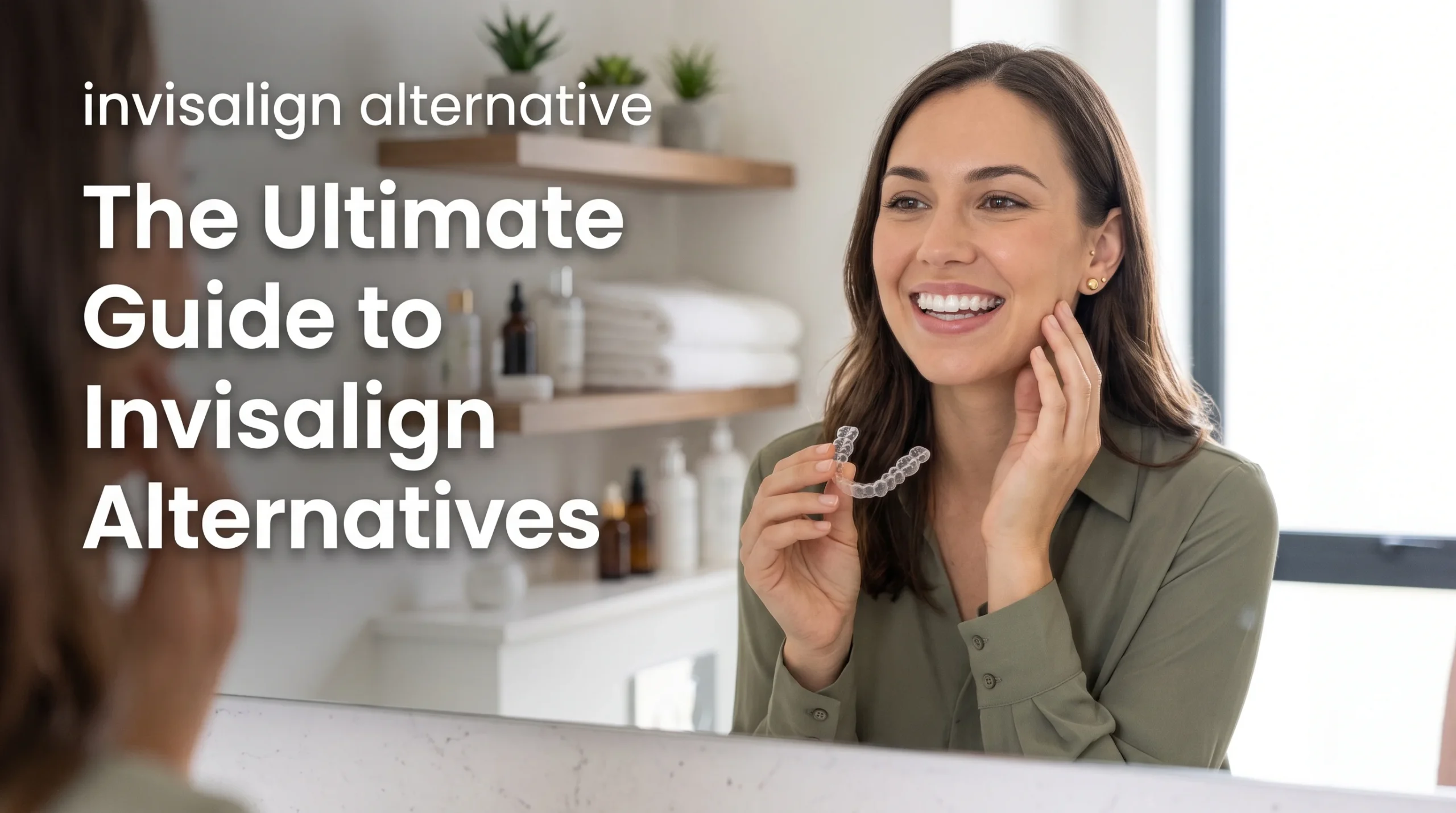
Invisalign transformed modern orthodontics by proving that teeth can be straightened without metal brackets. However, as the orthodontic market matures, millions of patients are realizing that the pioneer brand is not the only path to a confident smile. A primary driver behind this shift is the substantial brand markup associated with household names. Patients frequently ask their dental providers for a reliable invisalign alternative that delivers identical or superior tooth movement without inflated lab fees.
Lifestyle considerations also play a huge role. Removable clear aligners demand strict personal discipline, requiring patients to wear their trays for 20 to 22 hours every single day. For individuals who struggle with this strict compliance schedule or who deal with complex skeletal bite discrepancies, exploring other treatment options is essential.
Modern digital dentistry offers diverse solutions that balance aesthetic discretion, clinical strength, and financial practicality.
Top Doctor-Supervised In-Office Clear Aligner Alternatives
When patients seek a direct invisalign alternative, in-office clear aligner systems supervised by licensed orthodontists and dentists represent the gold standard for clinical safety and predictable movement.
Spark Clear Aligners: TruGEN Material vs. SmartTrack
Manufactured by Ormco, Spark Clear Aligners have quickly become a premier doctor-led system. Spark utilizes a proprietary polymer known as TruGEN, engineered to offer higher optical clarity and superior resistance against staining from coffee, tea, and daily wear compared to traditional SmartTrack plastic.
Spark aligners feature polished, scalloped edges that closely follow the natural gum line, significantly reducing soft-tissue irritation while maintaining steady force application between tray changes.
ClearCorrect: High Performance and Budget-Friendly Engineering
ClearCorrect is widely recognized as one of the most accessible in-office aligner options. Built with a proprietary tri-layer ClearQuartz material, these aligners provide continuous, gentle force while resisting fractures. Unlike systems with scalloped margins, ClearCorrect uses a straight-cut trim line that extends above the gum line. This design provides greater mechanical retention and grip, often reducing the need for excessive composite attachments while keeping lab costs affordable.
SureSmile, Angel Aligner, and 3M Clarity: Precision Digital Workflows
Other advanced systems include SureSmile, which relies on robust digital simulation algorithms to design exceptionally efficient tooth movement pathways, often resulting in fewer total aligner trays.
Angel Aligner and 3M Clarity aligners introduce dual-material staging, allowing orthodontists to vary plastic stiffness across different phases of treatment to handle complex movements with remarkable control.
Aesthetic Fixed Appliance Alternatives for Complex Corrections
Clear plastic trays are not the ideal solution for every smile. When severe dental misalignments or deep bite corrections require 24/7 mechanical force, aesthetic fixed braces serve as a powerful invisalign alternative.
+--------------------+---------------------+----------------------+-------------------+
| Fixed System       | Appliance Placement | Aesthetic Visibility | Clinical Power    |
+--------------------+---------------------+----------------------+-------------------+
| Ceramic Braces     | Front of Teeth      | Subtle Tooth-Colored | Comprehensive     |
| Lingual Braces     | Back of Teeth       | 100% Invisible       | Maximum Precision |
| Self-Ligating      | Front of Teeth      | Low-Profile Metal    | Fast Adjustments  |
+--------------------+---------------------+----------------------+-------------------+
Ceramic Braces: Power Meets Discreet Aesthetics
Ceramic clear braces work on the exact same mechanical principles as traditional metal braces, but their brackets are crafted from translucent or tooth-colored polycrystalline ceramic.
When paired with frosted or white archwires, ceramic braces blend naturally with your enamel. They provide continuous rotational control and vertical leveling for complex bite issues without drawing unwanted attention.
Lingual Braces: The Completely Invisible Fixed Option
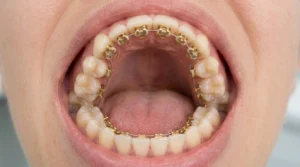
For working professionals and image-conscious adults seeking total discretion, lingual braces represent the ultimate hidden orthodontic treatment.
These custom-engineered brackets are bonded to the tongue side (back) of your teeth, rendering them completely invisible from the front. Lingual systems handle severe crowding and bite correction with unmatched precision, removing patient compliance worries entirely.
Modern Self-Ligating Metal Braces: Maximum Efficiency and Low Friction
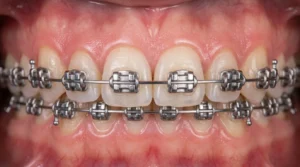
Modern traditional metal braces bear little resemblance to the bulky appliances of past decades. Contemporary self-ligating brackets utilize specialized sliding clips instead of elastic ties to secure the archwire. This mechanism reduces friction against moving teeth, makes hygiene maintenance simpler, and shortens adjustment visits at the clinic.
The Clinical Suitability Matrix: Matching Alternatives to Dental Issues
Orthodontic treatments are specialized medical tools designed for specific anatomical corrections. Choosing the most effective invisalign alternative depends entirely on the nature of your malocclusion.
+----------------------------+-----------------------------+----------------------------+
| Dental Condition           | Recommended Treatment       | Why It Works               |
+----------------------------+-----------------------------+----------------------------+
| Mild Spacing & Relapse     | ClearCorrect or Spark Lite  | Targeted crown tipping     |
| Moderate Crowding/Rotation | Spark or In-Office Aligners | Direct attachment leverage |
| Severe Deep/Cross/Underbite| Ceramic or Lingual Braces   | Full 3D bodily root torque |
+----------------------------+-----------------------------+----------------------------+
Mild Spacing and Minor Relapse
Minor gaps (under 3mm) or mild post-braces relapse do not require heavy fixed mechanics. In-office clear aligner packages, such as ClearCorrect or Spark, resolve these cosmetic concerns comfortably within three to six months.
Moderate Crowding and Rotational Corrections
Moderate crowding, overlapping incisors, and tooth rotations between 20 and 40 degrees require composite attachments bonded to enamel. Dedicated doctor-led aligner systems apply calibrated push-force to move roots along with the crowns safely.
Severe Bite Discrepancies
Significant skeletal crossbites, severe deep overbites, open bites, and major underbites demand continuous multi-directional force. In these situations, ceramic braces or lingual braces deliver the comprehensive root torque and skeletal leveling needed to protect long-term joint and gum health.
Direct-to-Consumer Mail-Order Aligners: Truths, Risks, and Safety
The rise of direct-to-consumer (DTC) mail-order aligner kits promised convenience by eliminating clinic visits. However, patients exploring a DIY invisalign alternative must understand the biological realities of moving teeth through jawbone.
Tooth movement is a complex cellular remodeling process. Applying continuous pressure to teeth with undiagnosed gum disease, short roots, or hidden bone loss can result in irreversible gum recession, loose teeth, and bite collapse.
Proper orthodontic planning requires comprehensive panoramic imaging and physical evaluations. While hybrid models with initial in-person digital scans offer improved safety, completely unmonitored DIY treatments pose serious clinical risks.
The Science of Tooth Movement: Attachments, Wear Schedules, and Materials
Understanding the mechanics of orthodontic movement makes it easy to see why certain options produce faster, more predictable results.
Composite Attachments vs. Plain Plastic Trays
Aligners without attachments can only tip tooth crowns. To accomplish complex root movements, extrusions, and severe rotations, doctor-led systems place small, tooth-colored composite buttons on specific teeth.
These buttons act as anchor points, giving the aligner tray the mechanical leverage required to pull and guide roots predictably.
The Biology of 22-Hour Wear vs. The Pitfalls of Nighttime-Only Aligners
Bone remodeling around moving teeth relies on uninterrupted, light orthodontic force. When aligners are worn for 22 hours daily, the periodontal ligament adjusts smoothly, allowing osteoclasts to resorb bone and osteoblasts to rebuild it.
Wearing trays exclusively at night (8 to 10 hours) places teeth in an unnatural biological tug-of-war. The teeth begin shifting at night, only to relapse slightly during the day. This constant back-and-forth cycle can inflame periodontal tissues and elevate the risk of root shortening.
Cost, Insurance, and Value Breakdown: What You Will Actually Pay
Cost remains a leading reason patients seek an affordable invisalign alternative. Total treatment pricing varies based on case complexity, geographical location, and appliance type.
Utilizing Insurance, FSA, HSA, and Payment Plans
Most major dental insurance policies that include orthodontic benefits cover qualifying aligner treatments regardless of brand, providing a lifetime benefit typically ranging from $1,000 to $3,000.
Flexible Spending Accounts (FSA) and Health Savings Accounts (HSA) allow you to apply pre-tax dollars directly to treatment fees. Additionally, most modern clinics offer zero-interest monthly financing to spread payments across the active treatment period.
The Five-Year Horizon: Refinements and Retainer Maintenance
When evaluating an invisalign alternative, look closely at the complete treatment quote. Ask whether mid-course corrections, refinement aligners, and post-treatment retainers are included.
Retainers (such as clear Essix retainers or bonded lingual wires) must be worn nightly for life to prevent relapse. Factoring in future retainer replacements ensures transparent long-term budgeting.
How to Choose the Right Orthodontic Path
Selecting the ideal treatment comes down to three clear considerations:
-
Your Diagnostic Complexity: If you have severe bite issues, choose fixed ceramic or lingual braces. For mild to moderate aesthetic corrections, doctor-supervised clear aligners are ideal.
-
Your Daily Routine: If you can commit to removing trays only for meals and brushing, clear aligners provide unmatched freedom. If you know you will misplace aligners, fixed appliances provide continuous progress without effort.
-
Your Overall Budget: Compare in-office alternatives like ClearCorrect or Spark with your local provider to receive high-level clinical care at a fair price.
Schedule an in-person consultation with a board-certified orthodontic specialist to review digital scans and select the perfect treatment plan for your smile.
FAQs
What is the closest in-office invisalign alternative?
ClearCorrect and Spark Clear Aligners are the closest direct competitors. Both systems are managed in-person by licensed dental professionals, utilize advanced clear polymers, and support tooth-colored composite attachments for precise movement.
Are ceramic braces more effective than clear aligners?
Ceramic braces deliver continuous, fixed force around the clock. While premium clear aligners excel at mild to moderate alignment, ceramic braces are generally more effective for severe rotations, vertical tooth leveling, and major skeletal bite discrepancies.
Will dental insurance cover clear aligner alternatives?
Yes. If your dental insurance plan includes an orthodontic rider, benefits generally apply across doctor-prescribed treatments, including ceramic braces, ClearCorrect, Spark, and other in-office aligner systems.
