
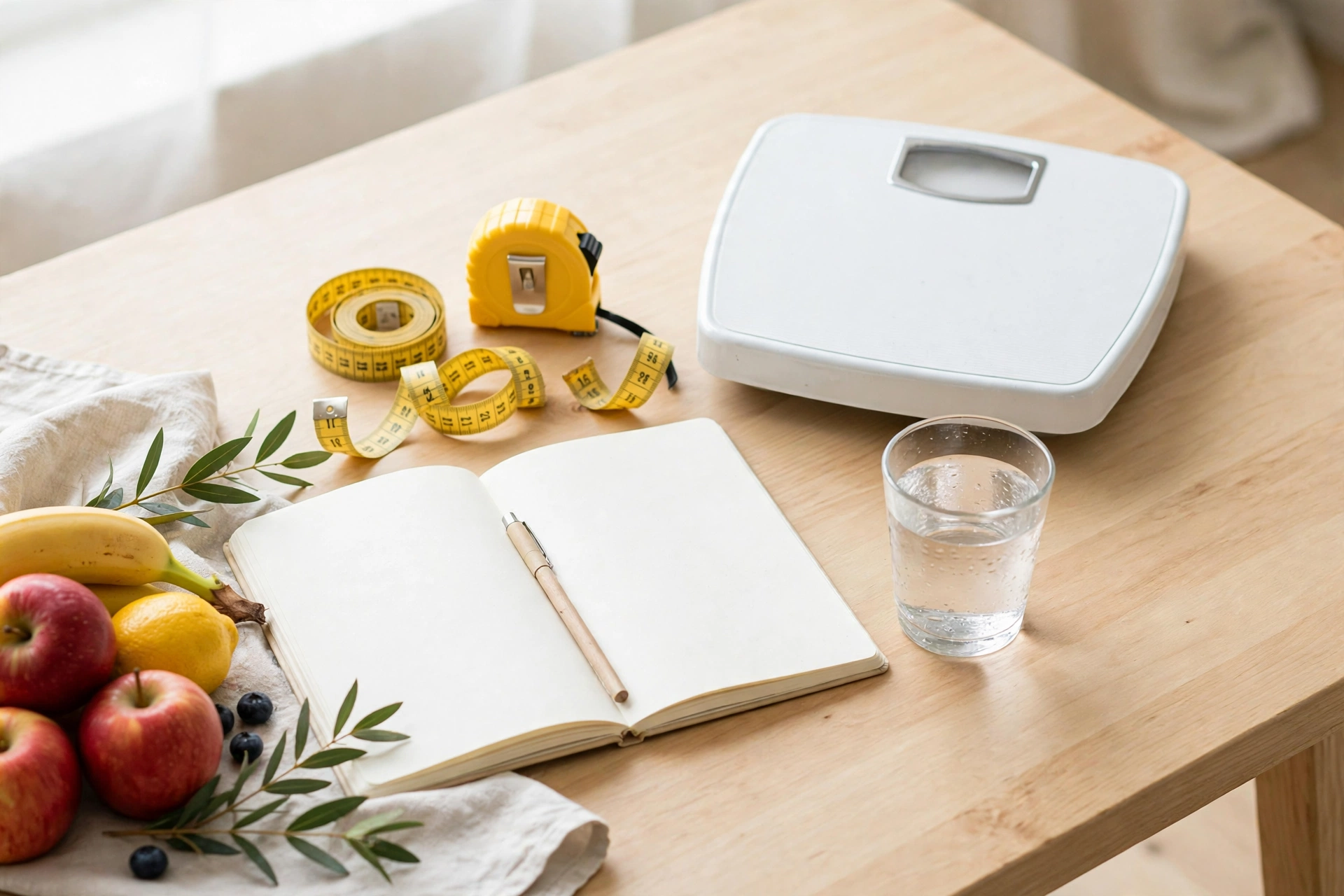
A weight loss calculator turns four simple numbers — your age, height, weight and activity level — into a starting point. It gives you a body mass index (BMI) and a daily calorie guide. Then you can stop guessing and start with facts. That is why a weight loss calculator works best as a first step, not a final answer. First, this guide shows you how to read the result. It explains what BMI does and does not tell you. It also shows how to lose weight at a pace that lasts. You will also find honest answers on losing a stone, body fat and hunger. It also gives clear advice on when to see your GP.
What a Weight Loss Calculator Tells You
A weight loss calculator asks for your age, sex, height, weight and how active you are. Then it works out two numbers. First, it gives you a BMI, which places your weight in a category. Second, it gives you a daily calorie guide for losing weight at a steady pace. A BMI weight calculator works the same way — it takes the same four numbers and returns the same two results. However, the result from a weight loss calculator is an estimate, not a medical target. For example, it cannot see your muscle, your health history or where you carry fat. So treat the number as a starting point, then use the rest of this guide to read it well.
Weight Loss Calculator: How to Work Out Your Body Mass Index
BMI stands for body mass index. It divides your weight in kilograms by your height in metres squared. Overall, the maths is simple. Take your weight in kg. Divide it by your height in metres. Then divide the answer by your height again. For example, a person who weighs 80 kg and stands 1.70 m tall works it out like this: 80 ÷ 1.70 ÷ 1.70 = 27.7. Finally, that number is the BMI.
In fact, most BMI calculator tools do this sum for you. They ask for your weight in kg and your age. Age shapes your calorie target, but it does not change the BMI sum itself. Women and men use the same formula, so the way to calculate BMI for women is exactly the same. Take your BMI reading in the morning, after you use the toilet and before breakfast, for the steadiest result. If you want to work out your BMI by hand, a phone calculator and a tape measure are all you need.
What Is BMI, and What Are the Categories?
The NHS places every adult BMI into one of four groups. Below 18.5 is underweight. From 18.5 to 24.9 is a healthy weight. From 25 to 29.9 is overweight. A BMI of 30 or over is obese, which doctors sometimes call an obese BMI. These bands are a screening tool, not a diagnosis.
For people of Black, Asian and some other minority ethnic backgrounds, the healthy range runs from 18.5 to 23, because health risks rise at a lower BMI. Your BMI calculator result also comes with a healthy weight range for your height. For example, the tool may tell you that a healthy weight for you sits between 58 and 78 kg. That range matters more than a single number, because it gives you room to aim for. If your result lands near a boundary, your waist size and your general health matter more than the exact figure.
What Your BMI Does Not Tell You
BMI is a useful starting point, but it has clear limits. It cannot tell muscle from fat. A rugby player with heavy muscle can land in the overweight band while carrying very little fat. It also says nothing about where you carry fat. Fat around the waist carries more risk than fat on the hips. That is why the NHS also suggests a tape measure. A waist under 94 cm for men and under 80 cm for women points to lower risk. For South Asian men, the guide is under 90 cm.
Measure halfway between your lowest rib and the top of your hip bone, and breathe out first. If you want to determine your body fat percentage, remember that bathroom scales which claim to read it give only a rough body fat estimate. They guess from a small electric current, and water levels change the reading. Waist size, how your clothes fit and how you feel give a truer picture over time.
Can I Lose a Stone in a Month? The Honest Answer
Many people search for how to lose a stone in a month, so here is the honest answer. One stone weighs 6.35 kg. The NHS advises a safe pace of about 0.5 to 1 kg a week, which is 1 to 2 lb. At that pace, a stone takes roughly 6 to 13 weeks. So can you lose a stone in a month? The maths says it would need a loss of about 1.6 kg a week, which is faster than the safe rate.
Fast loss often means lost water and muscle, not fat, and the weight often comes back. A weight loss calculator can show you a safe weekly target, but it cannot make the month shorter. If you want to lose a stone in a month for a holiday or an event, aim for a smaller, steadier goal instead. How long does it take to lose a stone? For most people, about two to three months of steady habits. That answer may feel slow, but it is the pace that lasts.
Weight Loss Calculator: How Can I Lose Body Fat Safely?
Fat loss comes from a small, steady calorie gap. The NHS guide suggests a daily cut of about 500 to 600 calories. That usually gives a loss of 0.5 to 1 kg a week. Start with your calculator target, then build your meals around it. Build meals around protein, vegetables and wholegrains, because they keep you full for longer. Drink water instead of sugary drinks, and keep portions sensible.
Move more each day. Aim for 150 minutes of moderate movement each week — brisk walking or cycling both count — plus strength work twice a week. You do not need a gym. Short walks, stairs and bodyweight moves at home all count. Losing weight slowly protects your muscle and your energy. Track your weight once a week, at the same time of day, and look at the trend over a month, not a single day. If the number stalls for three weeks, trim one small habit, such as a sugary drink or a late snack, and keep going.
Why Am I Hungry All the Time?
Hunger has many causes, and food is only one of them. Short sleep raises hunger hormones, so a late night often brings cravings the next day. Meals low in protein and fibre also leave you hungry soon after eating. Sugary drinks and snacks spike your energy and then drop it, which brings hunger back fast. Stress plays a part too. When life feels tense, many people reach for sweet or fatty food without thinking. If that sounds familiar, our stress guide explains simple daily steps that can calm the pattern. Drink water first when hunger strikes, eat slowly, and keep protein in every meal. If hunger stays constant even when you eat well and sleep enough, speak to your GP, because constant hunger can sometimes point to a health problem.
Weight Loss Calculator Results and PCOS: A Short Note
PCOS can make weight loss harder. The condition affects hormones, and many women with PCOS find that weight gathers around the waist and moves slowly, even with steady habits. If that is your experience, you are not doing it wrong. Weight reduction with PCOS still follows the same safe habits in this guide, but progress may take longer. Some people search for supplements for PCOS, yet no supplement is a proven route to weight loss, and none can replace food and movement habits. Ask your GP before you try anything new, and ask about NHS weight management support in your area.
When to See Your GP
Most people can start with the safe habits in this guide. See your GP sooner if you notice rapid weight loss without trying, or if thoughts about food and weight take over your day. Ask for advice too if you live with diabetes or PCOS, if your BMI sits well above 30, or if you take medicine that affects your weight. Young people under 18 should not follow a weight-loss plan unless a doctor advises it. Prescription weight-loss medicines exist, but only a GP can judge whether they suit you — ask your GP, and never buy them online. Your GP can look at your health, agree a safe target with you and point you to free NHS support.
FAQs
Is a weight loss calculator accurate?
For most healthy adults, the number is a solid estimate. Take the number as a starting point, then weigh yourself weekly for the next two to three weeks. If nothing changes, trim your daily target by 100 to 200 calories and keep going.
How do I use a BMI calculator in kg?
Enter your weight in kilograms and your height in metres or centimetres. A BMI calculator works out your BMI and your healthy weight range. Check your age too, because most tools use it to set your calorie target.
What is the healthiest rate to lose weight?
About 0.5 to 1 kg a week. That pace protects your muscle, keeps your energy steadier and makes the loss easier to keep off.
Does BMI work for everyone?
No. It is a starting point, not a verdict. It cannot see muscle, age or where you carry fat. Use it with your waist size and how you feel, and ask your GP if you are unsure.
Start with a weight loss calculator to find your starting point, then build one habit at a time — a smaller plate, a daily walk, a regular bedtime. Small steps build up over time. This guide shares general information only, and it is not a substitute for personal medical advice. If you live with a health condition, speak to your GP first before you change how you eat or move.
