
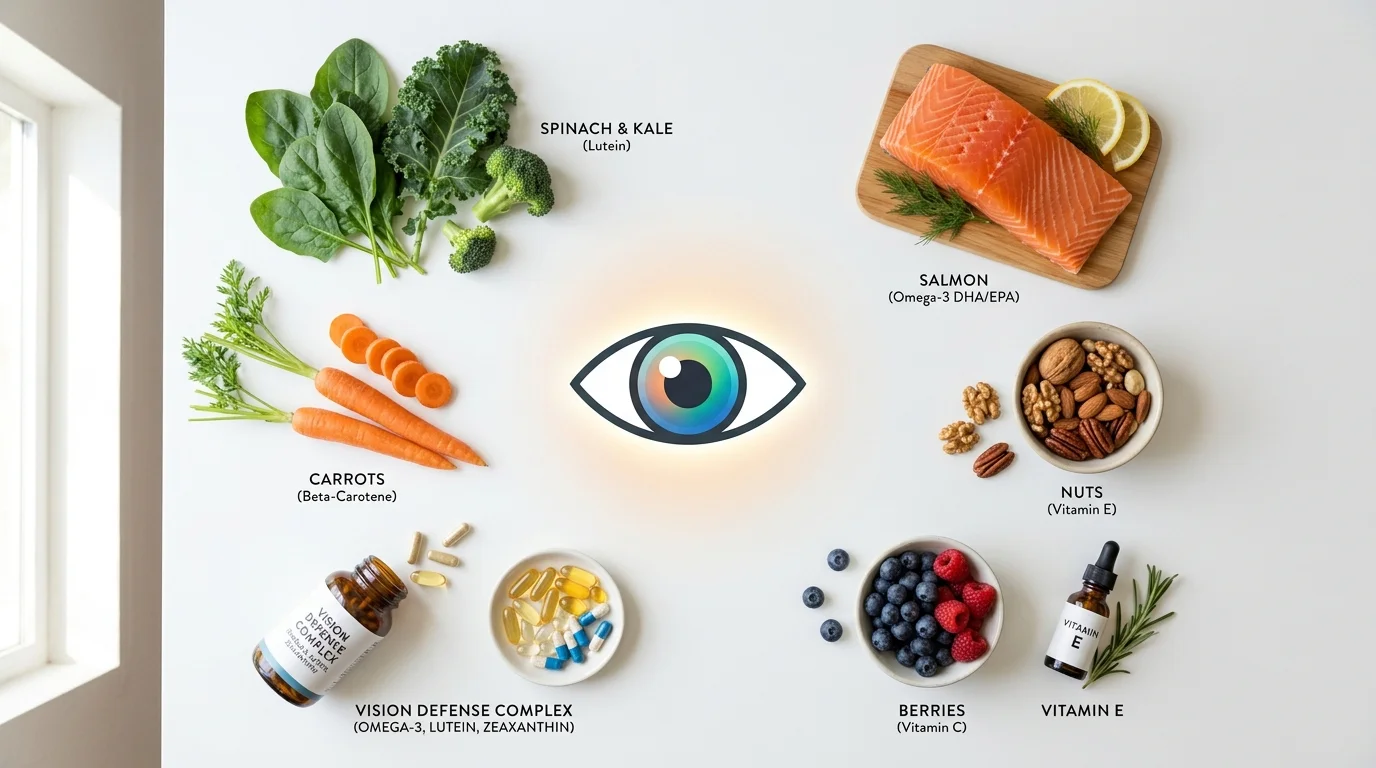
What Are Eye Vitamins and Why Are They Important?
The term eye vitamins refers to a group of essential nutrients that support healthy vision, retinal function, and overall eye wellness. These nutrients are usually found in food sources or dietary supplements and play an important role in maintaining visual performance over time. Modern research in nutrition and optometry shows that vitamins such as A, C, and E, along with minerals like zinc and compounds like lutein and zeaxanthin, are closely linked to eye health. These nutrients help protect eye cells from oxidative stress, which is a key factor in age-related vision decline.
In simple terms, eye nutrients act like protective support for the delicate structures of the eyes, especially the retina and macula, which are responsible for sharp and central vision.
How Eye Vitamins Support Eye Function and Retinal Health
The human eye is highly sensitive to environmental stress, including UV exposure, digital screens, and aging. Nutrients found in eye vitamins help reduce damage caused by free radicals and support normal visual function.
Key benefits include:
- Supporting retinal cell health
- Helping reduce oxidative stress
- Supporting macular pigment density
- Maintaining normal tear production
- Supporting night vision and light adaptation
The retina and macula contain high concentrations of carotenoids like lutein and zeaxanthin, which act as natural filters against harmful light. Studies in nutritional science and ophthalmology suggest that consistent intake of these nutrients supports long-term visual comfort.
Most Important Vitamins and Nutrients for Eye Health
Vitamin A and Night Vision Support
Vitamin A plays a key role in maintaining clear vision in low-light conditions. It supports the production of rhodopsin, a pigment in the retina that helps the eyes adjust in darkness.
Vitamin C and Eye Tissue Protection
Vitamin C acts as a strong antioxidant that helps protect eye tissues from oxidative stress. It may also support the health of blood vessels in the eyes.
Vitamin E as an Antioxidant Shield
Vitamin E helps protect eye cells from damage caused by free radicals, supporting long-term eye health.
Zinc and Vitamin Absorption
Zinc supports the transport of vitamin A from the liver to the retina and plays a role in overall retinal function.
Lutein and Zeaxanthin for Macular Protection
These carotenoids are found in high concentration in the macula. They help filter harmful blue light and support visual clarity.
Omega-3 Fatty Acids and Tear Production
Omega-3 fatty acids support tear film stability and may help reduce dry eye symptoms, especially in individuals with long screen time.
AREDS and AREDS2 Formula Explained
The AREDS and AREDS2 studies are major clinical trials conducted in eye health research. These formulas include a combination of vitamins C and E, zinc, copper, lutein, and zeaxanthin. They are commonly recommended for individuals at risk of age-related macular degeneration. However, these formulas are not intended for general vision improvement but rather for targeted nutritional support under specific conditions.
Foods That Naturally Improve Eye Health
A balanced diet is one of the most effective ways to support vision health. Many nutrients found in supplements are also available in natural foods.
Recommended foods include:
- Leafy green vegetables such as spinach and kale
- Fatty fish like salmon and sardines
- Carrots and sweet potatoes are rich in beta carotene
- Citrus fruits rich in vitamin C
- Nuts and seeds for vitamin E

A Mediterranean-style diet is often associated with better eye health outcomes due to its balance of antioxidants and healthy fats.
Do Eye Vitamins Really Work? Evidence-Based Analysis
Scientific research suggests that supplements can support eye health, especially in cases of nutrient deficiency or age-related decline. However, they are not a cure for vision problems.
Clinical studies show that antioxidants and carotenoids can help maintain retinal health and reduce the risk of progression in certain eye conditions. At the same time, results vary depending on diet, lifestyle, and individual health conditions. It is important to understand that supplements are supportive, not corrective. They work best when combined with a healthy diet and proper eye care habits.
Who Actually Needs Eye Vitamins?
Certain groups may benefit more from targeted nutritional support:
- Older adults experiencing age-related vision changes
- People with limited dietary intake of fruits and vegetables
- Individuals at risk of macular degeneration
- Smokers who have higher oxidative stress levels
- People exposed to prolonged screen time and eye fatigue
A healthcare professional should always be consulted before starting any supplement routine, especially for those with existing medical conditions.
Possible Side Effects and Safety Considerations
While nutrients are generally safe when taken in recommended amounts, excessive supplementation can lead to unwanted effects.
Possible concerns include:
- Vitamin toxicity from high doses
- Interaction with medications
- Digestive discomfort in some users
- Imbalance of nutrient levels
Balanced intake through diet is usually preferred, with supplements used only when necessary.
How to Choose the Right Eye Supplement
Selecting a quality supplement requires attention to ingredient quality and formulation.

Key factors to consider:
- Presence of lutein, zeaxanthin, and omega-3
- Balanced dosage of vitamins A, C, and E
- Zinc content in appropriate amounts
- Clinical backing or evidence-based formulation
- Third-party testing and quality certification
When choosing eye vitamins, it is important to avoid products with unrealistic claims such as instant vision improvement. A reliable supplement focuses on long-term support rather than quick fixes.
Lifestyle Habits That Support Long-Term Eye Health
Good vision depends not only on nutrition but also on daily habits.
Helpful practices include:
- Following the 20-20-20 rule during screen use
- Wearing UV protective sunglasses outdoors
- Staying hydrated to support tear production
- Getting regular eye checkups
- Maintaining proper lighting while reading or working
These habits work together with nutrients to support overall visual comfort and long-term eye wellness.
FAQs
Do eye vitamins improve vision?
They do not directly improve vision but may support overall eye health and help maintain normal visual function.
Can diet replace supplements?
A nutrient-rich diet can often provide sufficient support, but supplements may help in cases of deficiency.
How long do results take?
Results vary, but nutritional support typically requires consistent use over several weeks or months.
Are eye vitamins safe for daily use?
Most are safe when taken within recommended dosages, but medical advice is recommended.
Can eye vitamins help with eye strain?
They may help support eye comfort, especially nutrients like omega-3 and lutein.
Conclusion
Maintaining healthy vision requires a combination of good nutrition, lifestyle habits, and preventive care. Nutrients commonly found in eye vitamins play an important role in supporting retinal health, reducing oxidative stress, and maintaining long-term visual function.
However, they should not be seen as a replacement for medical treatment or a poor diet. Instead, they work best as part of a balanced lifestyle that includes proper nutrition, regular eye checkups, and healthy screen habits. By focusing on evidence-based nutrients like lutein, zeaxanthin, omega-3 fatty acids, and essential vitamins, individuals can take proactive steps toward better eye health and long-term visual wellness.
