
Do you want to improve gut health and feel better after meals? This UK guide gives you practical steps for IBS, bloating, trapped wind, constipation, acid reflux and more. First, read it as general information only. It never diagnoses you, and it never replaces advice from your GP.
Above all, your gut does more than digest food: trillions of microbes there help you break down fibre. In fact, a healthy gut can mean steadier energy and calmer digestion.
What Does Gut Health Mean?
In short, good gut health means smooth digestion: you pass stools regularly, feel little pain after meals, and bloating stays rare. In other words, your gut moves food along and absorbs what you need. So how long are the small and large intestines? The small intestine runs about 6 metres, and the large intestine about 1.5 metres.
Trillions of microbes live in your large intestine: scientists call this community the gut microbiome. For example, different plant foods feed different microbes, so a varied diet supports a healthy gut.
How to Improve Gut Health with Food
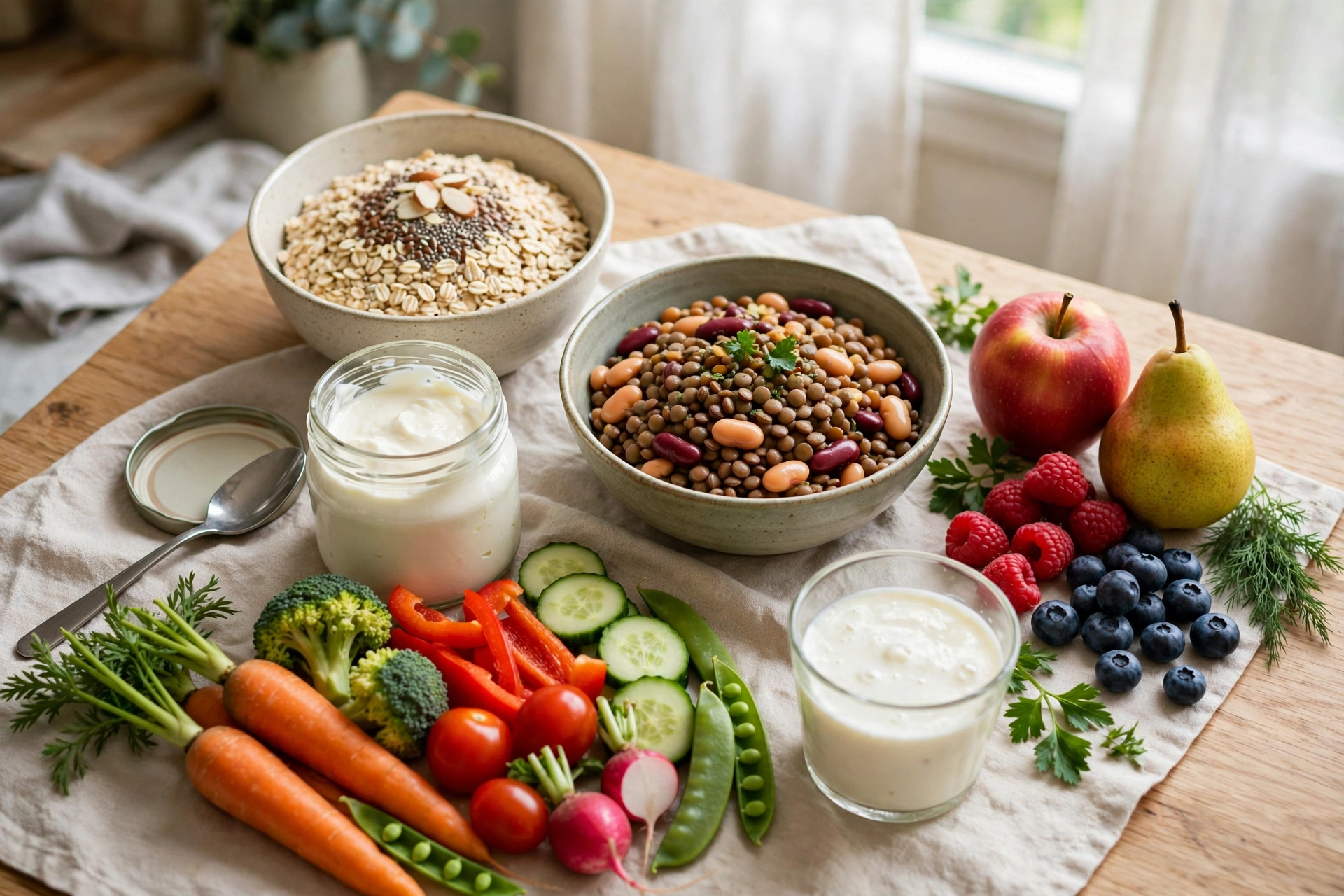
Above all, food shapes your gut most. The NHS recommends about 30g of fibre a day for adults, yet most people in the UK eat far less. First, add fibre slowly: oats, beans, lentils, wholemeal bread, fruit and vegetables all feed your gut microbes. Next, aim for variety. Try 30 plant foods a week, herbs and spices included.
Fermented foods also help: live yoghurt, kefir and kimchi contain live bacteria. Also, drink enough fluid: the NHS suggests 6 to 8 glasses a day. You may also see a women’s probiotic on shop shelves, but evidence varies.
Daily Habits That Improve Gut Health
Food alone cannot do it: your daily habits play a big part too. First, move your body. A daily walk helps your gut move food along, and it eases bloating. Next, protect your sleep. Poor sleep can upset digestion, so aim for a regular bedtime. Then manage stress: it can speed up or slow down your gut and worsen IBS symptoms. Breathing exercises and yoga both help.
Also, chew your food well, and eat at regular times. So your gut likes routine, and regular meals can steady your bowel habit.
IBS Symptoms in Men and Women
Overall, IBS affects about 1 in 5 people in the UK at any age. The main symptoms are stomach cramps, bloating, diarrhoea and constipation. Also, pain often worsens after eating and eases after you open your bowels. In fact, some get IBS diarrhoea, others IBS constipation, and some swing between the two. IBS can also cause wind, mucus, tiredness and nausea.
IBS symptoms in men and IBS symptoms in women look much the same. However, some women notice their symptoms change around their period. Irritable bowel symptoms in women can also link with bladder urgency and pelvic pain. If symptoms persist, see your GP to check for other causes.
Irritable Bowel Syndrome Treatments
There is no cure for IBS, but many people control it well. First, keep a food and symptom diary: it shows your triggers and helps your GP or dietitian advise you. Next, try general diet changes: regular meals, enough fluid and less fatty, spicy or processed food. Some people benefit from a low-FODMAP diet, but only follow it with a dietitian.
Your GP or pharmacist can discuss medication for IBS with you. In short, irritable bowel syndrome treatments work best as a mix of food, habits and medical advice. These steps can help your gut over time, even when symptoms flare up.
How to Get Rid of Bloating Fast and Improve Gut Health
In short, bloating means your tummy feels full, tight or swollen, often after a large meal or fizzy drinks. The causes of bloating vary from person to person. The causes of abdominal bloating include eating too fast, swallowing air, constipation and IBS.
For fast bloating relief, try this. First, take a short walk after meals to move gas through your gut. Next, sip water, avoid fizzy drinks and try peppermint tea. Also, eat slowly and avoid chewing gum. If you want to know how to get rid of bloating fast, start with these habits. To learn how to relieve bloating quickly at work, take a short walk and drink a glass of water.
Trapped Wind and How to Relieve It
Trapped wind causes sharp tummy pain, a swollen belly and a feeling of fullness. It happens when gas builds up and cannot escape easily. Eating fast, fizzy drinks, beans and cabbage-family vegetables can all add gas.
For trapped wind relief, move around first. A gentle walk often shifts gas within minutes. Next, lie on your side and sip warm water. To relieve trapped wind over time, eat slowly and note your triggers. See your GP if trapped wind comes with severe pain, vomiting or blood in your stools.
Constipation and Natural Remedies to Improve Gut Health
In short, constipation means you open your bowels less often, or you strain and feel you cannot empty them fully. So what causes constipation? A low-fibre diet, too little fluid, too little movement and some medicines can all slow your gut.
Natural constipation remedies start with food and fluid. First, raise your fibre slowly with oats, fruit, vegetables and pulses. Next, drink 6 to 8 glasses of fluid a day. Then move more. Also, answer the urge to go straight away. If it lasts weeks, or comes with blood, weight loss or severe pain, see your GP.
Acid Reflux and Heartburn
What is acid reflux? In other words, stomach acid flows back into the food pipe and causes a burning feeling in the chest. The symptoms of acid reflux disease include heartburn, a sour taste, burping and a sore throat. For example, large meals, spicy food, alcohol and lying down soon after eating often worsen symptoms.
So what causes heartburn? The ring of muscle at the base of the food pipe can weaken and let acid escape upward. Your stomach makes strong acid to break down food. The acidity of stomach acid helps kill germs, but that same acid stings the food pipe. Natural remedies for acid reflux include smaller meals, earlier evenings and a raised bed head. If you wonder how you can relieve heartburn quickly, sit upright and sip water. See your GP if heartburn happens often.
Hiatus Hernia and Polyps
In short, a hiatus hernia happens when part of the stomach pushes up through the diaphragm into the chest. Hiatus hernia symptoms include heartburn, acid reflux, chest pain and difficulty swallowing. Hiatal hernia symptoms often match acid reflux, so a GP may need tests to tell them apart. Smaller meals can ease symptoms.
What is a polyp? In short, it is a small growth on the lining of the bowel. Also, most polyps cause no symptoms, and doctors find them during screening. Some can turn into cancer over years, so doctors remove them. The NHS offers bowel screening every two years to people aged 50 to 74 in England. See your GP if you notice blood or a lasting change in bowel habit.
Ulcerative Colitis, IBD and IBS: What Is the Difference?
What is IBD? In short, IBD means inflammatory bowel disease, where the bowel becomes inflamed. Its two main types are ulcerative colitis and Crohn’s disease. What is ulcerative colitis? It inflames the colon and rectum, and it can cause bloody diarrhoea, pain and an urgent need to go. IBD differs from IBS because it causes visible inflammation and damage. IBD needs specialist care, so a GP will refer you if they suspect it.
Also, diverticulitis affects small pouches in the bowel wall. Our diverticulitis diet guide explains which foods people with diverticulitis often avoid. If you notice blood in your stools, see your GP urgently.
Stomach Ulcers, Fatty Liver and Bowel Infection
What are the symptoms of a stomach ulcer? In short, they include burning stomach pain, indigestion, heartburn, nausea and feeling full quickly. See your GP if you notice these symptoms, especially with vomiting blood or black stools.
In other words, a fatty liver means extra fat builds up in the liver. To learn how to get rid of a fatty liver, keep a healthy weight, move more, eat well and cut back on alcohol.
The symptoms of bowel infection include diarrhoea, stomach cramps, fever, nausea and vomiting. Most pass in a few days, so rest and drink plenty of fluid. See your GP urgently if you pass blood, cannot keep fluids down, or symptoms last more than a few days.
When to See a Gastrologist
What is a gastrologist? In short, a gastrologist is a doctor who specialises in the digestive system. Your GP can refer you if your symptoms need expert tests.
See your GP urgently, or call NHS 111, for blood in your stool, tarry stool, weight loss, vomiting or severe pain. What causes blood in stool? Piles, a small tear or inflammation can all cause it, but only a GP can find the cause. Call 999 if bleeding is heavy or you feel faint.
Health Checks: Full-Body MOT and NHS Screening
In short, a full-body MOT health check usually means a private assessment of blood tests, blood pressure and fitness. Also, the NHS offers a free NHS Health Check every five years to eligible adults aged 40 to 74 in England.
The NHS sends a bowel screening kit every two years to people aged 50 to 74 in England. If you are 75 or over, you can ask for a kit. See your GP at any age if you notice symptoms.
Improve Gut Health FAQs
Do I need a probiotic to improve gut health?
Not always. In fact, a varied, high-fibre diet can support your gut, and a GP or pharmacist can advise you.
Can stress affect my gut?
Yes. Stress can speed up or slow down your gut. In fact, breathing, sleep and gentle exercise can all help.
How can I get rid of diarrhoea?
First, rest, sip water and eat plain foods when ready. See your GP if it lasts days or comes with blood, fever or severe pain.
What causes blood in stool?
For example, piles, a small tear or inflammation can all cause it. So only a GP can find the cause: see yours urgently if you notice blood.
How long does IBS last?
In fact, IBS is often long-term, and symptoms come and go. Still, many manage it well with food changes, habits and GP advice.
When should I worry about bloating?
Finally, see your GP if it lasts three weeks, comes with weight loss or blood, or keeps coming back.
In short, now you know how to improve gut health step by step. Start small: add fibre slowly, drink water, move daily and keep a food diary. Finally, see your GP if symptoms persist.
