
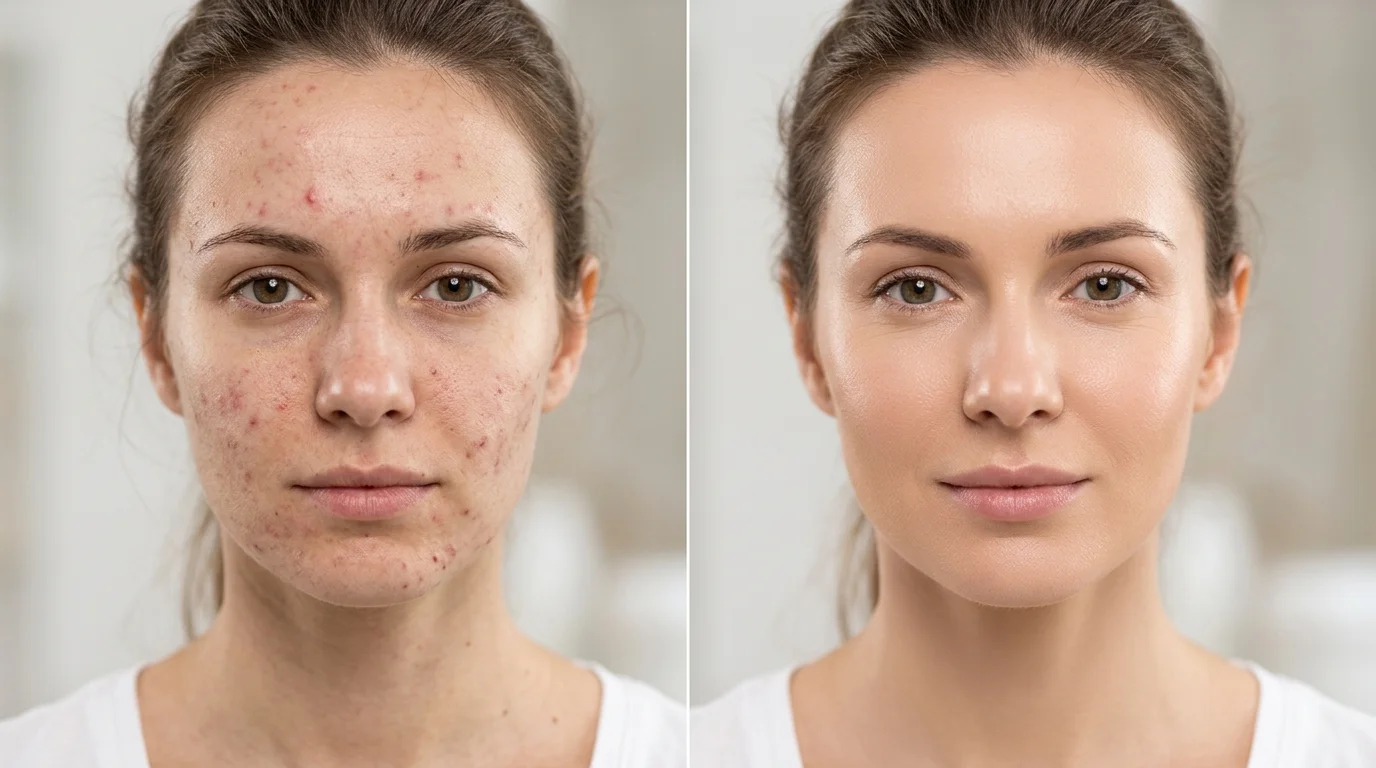
Starting a new skincare routine can feel equal parts exciting and terrifying. If you are standing in front of your bathroom mirror holding a tube of topical tretinoin, you are likely looking for reassurance. You want to know if the upcoming adjustment period is truly worth it. By analyzing real user transformations and clinical data, this guide breaks down the realistic expectations of a tretinoin before and after journey so you can navigate the process with complete confidence.
What Does Topical Tretinoin Actually Do for the Skin?
Tretinoin, commonly known as retinoic acid, is a powerful prescription skincare derivative of Vitamin A. Unlike over-the-counter retinol, which requires your skin cells to convert the ingredient multiple times, tretinoin works immediately at a cellular level.
The Science of Skin Cell Turnover and Collagen Production
The primary mechanism behind tretinoin is its ability to accelerate skin cell turnover. In normal skin, it takes roughly twenty-eight days for a new skin cell to form, mature, and shed from the surface. Tretinoin condenses this cycle down to roughly fourteen days.
By forcing the skin to shed dead cells rapidly, it prevents pores from clogging and forces the lower layers of the skin to produce fresh, healthy tissue. Simultaneously, it signals fibroblasts in the dermis to ramp up collagen production. This dual action is why it remains the gold standard for both dermatologists and skincare enthusiasts globally.
Acne Clearing vs. Advanced Anti-Aging: Two Different Pathways
Because of how it alters cell behavior, tretinoin effectively treats two major skin concerns via distinct paths:
-
The Acne Pathway: It clears out microcomedones, which are the invisible plugs deep inside pores that eventually turn into blackheads and cystic acne.
-
The Anti-Aging Pathway: By building up collagen and thickening the deeper layers of the skin, it softens fine lines, smooths rough texture, and repairs structural sun damage.

The Real-World Tretinoin Timeline Results
True skin transformation is a slow process. Knowing what lies ahead month by month helps you stay patient and consistent.
Weeks 1 to 3: The Retinization Phase and Early Side Effects
When you first introduce this powerful molecule to your face, your skin undergoes a process called retinization. This is simply your skin adjusting to the accelerated cell turnover rate. During these initial weeks, you will likely experience common side effects such as redness, dry patches, flaking around the mouth and nose, and a general tight sensation. This is completely normal and indicates that the medication is actively altering your skin function.
Weeks 4 to 8: Deciphering the Dreaded Purging Phase
Around the one-month mark, many users encounter the purging phase. As cell turnover speeds up, all the hidden clogs, debris, and microcomedones that were lingering deep under your skin are pulled to the surface simultaneously.
Your acne might temporarily look worse before it improves. The key is to remember that these breakouts were already forming beneath the surface; tretinoin is simply clearing them out all at once to pave the way for healthy healing.
Months 3 to 6: Early Texture Smoothing and Hyperpigmentation Fading
This is the turning point where the positive shifts become highly visible. By month three, the purging settles down, and you will notice significant early tretinoin results.
New acne breakouts become rare, and when they do occur, they heal in a fraction of the time. The rapid shedding of damaged cells begins to show its true benefits as stubborn hyperpigmentation, sun spots, and dark marks left behind by old acne scars fade away, revealing an even skin tone underneath.
1 Year+: Deep Fine Line Reduction and the True “Tret Glow”
After a full year of consistent use, the deep structural changes take center stage. The long-term boost in collagen synthesis yields remarkable tretinoin before and after transformations. Fine lines soften, deeper wrinkles lose their severity, and the skin develops a signature radiant clarity often referred to as the tret glow. The surface of the skin becomes highly reflective, smooth, and firm.
Optimizing Your Tretinoin Skin Care Routine
Your supporting products determine how comfortable your journey will be. A minimalist, protective approach is essential for preventing unnecessary irritation.
How to Properly Apply a Pea-Sized Amount Without Irritation
More is not better when it comes to retinoids. Using an excessive amount will not speed up your results; it will only cause chemical irritation and damage your protective skin barrier.
After washing your face with a gentle cleanser, wait at least twenty minutes for your skin to dry completely. Applying the medication to damp skin increases absorption too rapidly, leading to severe flaking. Squeeze a strict pea-sized amount onto your fingertip, dot it onto your forehead, cheeks, and chin, and gently smooth it over your face, avoiding the delicate eye area and the corners of your lips.
The Tretinoin Sandwich Method: Protect Your Skin Barrier
If you have sensitive skin or are prone to extreme dryness, the sandwich method is an excellent technique to try. This process involves applying a thin layer of basic moisturizer first, waiting fifteen minutes, applying your pea-sized amount of tretinoin, and finishing with another layer of moisturizer on top. This creates a buffer that slows down the penetration of the active ingredient slightly, significantly reducing redness and flaking without hurting the overall efficacy of your treatment.
What Moisturizer to Use with Tretinoin?
When selecting a companion cream, look for formulas rich in ceramides, hyaluronic acid, fatty acids, and glycerin. These ingredients actively repair the skin barrier and lock in moisture. Avoid any moisturizers that contain active acids, artificial fragrances, or essential oils, as these can irritate skin undergoing retinization. Additionally, wearing a broad-spectrum sunscreen with at least SPF 30 every single day is non-negotiable, as the accelerated exfoliation leaves your skin temporarily more vulnerable to sun damage.

The Tretinoin Exit Strategy: When to Pivot Your Routine
Skincare is dynamic, and your routine needs to evolve alongside your skin changes.
Signs Your Skin Has Reached a “Results Plateau”
After eighteen to twenty-four months of continuous use, you might notice that your skin progress seems to level off. This does not mean the medication has stopped working. Instead, your skin has achieved a state of healthy maintenance. At this point, the focus shifts from actively repairing heavy damage to protecting and maintaining your clear, youthful skin texture.
How to Safely Transition from Acne Clearing to Long-Term Maintenance
Once your acne is fully under control, you can discuss adjusting your usage with your dermatologist. Some users find they can reduce application frequency from every night to three or four times a week while still retaining their excellent tretinoin before and after benefits. This flexibility allows you to prevent unnecessary dryness while maintaining your long-term collagen production.
Cyclical Tretinoin: Adjusting Your Routine for Winter Dryness vs. Summer Sun
Your environment plays a major role in how your skin tolerates active ingredients. During cold winter months, low humidity can amplify dryness and flaking. You may need to switch to a richer, lipid-dense cream or drop your application frequency down by one night a week. In contrast, summer brings higher humidity but intense UV exposure, making diligent morning sunscreen application your absolute highest priority.
The Psychological Side of the Purge: How to Keep Going
Managing a major skin transition requires emotional patience just as much as topical care.
Distinguishing Tretinoin Purge vs. Breakout
It can be difficult to tell if your skin is undergoing a standard purge or reacting poorly to a product. A true purge always occurs in areas where you naturally tend to get breakouts, and the spots pop up and resolve quickly. If you suddenly develop deep, painful cystic bumps in entirely new areas where you never usually break out, or if the irritation persists past the eight-week mark, your skin might be reacting poorly to the specific vehicle cream base, and you should consult your professional provider.
Tretinoin Skin Barrier Damage Signs to Watch Out For
There is a big difference between normal flaking and a compromised skin barrier. If your skin feels like it is burning when you apply a basic, gentle moisturizer, or if it looks shiny but feels tight, crinkly, and raw, you have likely over-processed your skin. If these signs occur, stop all active usage immediately for a few days and focus exclusively on hydration until your skin feels comfortable again.

Final Thoughts on Your Transformation
Achieving an impactful tretinoin before and after result requires consistency, time, and deep empathy for your skin as it goes through the healing process. By streamlining your surrounding routine, using the correct amount, and respecting the biological timeline, you can safely unlock the clear, glowing skin you deserve.
FAQs
Can I use salicylic acid or vitamin C while using tretinoin?
It is highly recommended to pause other harsh active chemicals, especially during the first few months of your routine. Once your skin is fully adjusted and no longer flaking, you can carefully reintroduce vitamin C in the morning, keeping your retinoid strictly for evening use.
What is the best age to start using tretinoin for anti-aging?
While many users start in their late twenties or early thirties when natural collagen production begins to slow down, there is no single right age. It can be safely introduced whenever you want to address fine lines, sun damage, or persistent adult acne.
Why does my skin look older or more wrinkled during the first month?
This is a very common temporary illusion caused by early surface dehydration and flaking. As the dead cells accumulate on the surface before shedding, it can make fine lines appear more pronounced. Once the old layer sheds completely and hydration is restored, the skin will look much smoother.
