
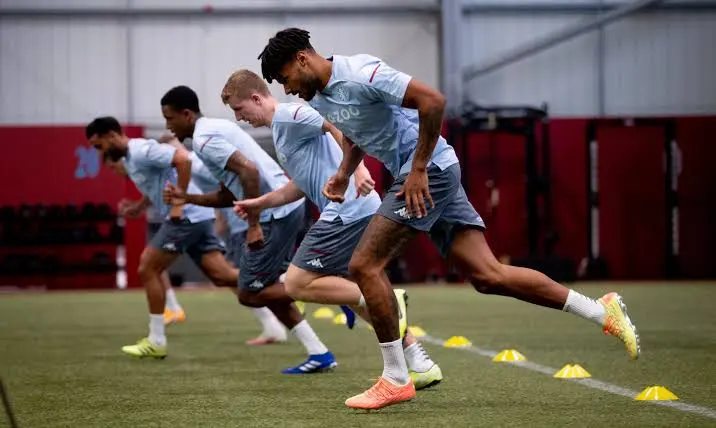
The MSFT test is one of the most widely used field assessments in sports science, physical education, and occupational recruitment. Whether you know it as the beep test, bleep test, PACER test, or 20-meter shuttle run, its fundamental purpose remains the same: to measure aerobic capacity by pushing your cardiorespiratory system to its absolute limits.
If you are facing the msft test for a sports academy assessment or an emergency services recruitment day, having a thorough understanding of the protocols, scoring mechanics, and physical demands will give you a decisive edge.
What Is the MSFT test?
Origins and Scientific Background
The concept of a continuous, progressive shuttle run originated with Canadian sports scientist Dr. Luc Léger. In 1982, Léger and Lambert published the original protocol using two-minute running stages. By 1988, Léger revised the protocol to one-minute intervals, which became the global gold standard used across education, sports performance, and uniformed public services today.
The Cardiorespiratory Engine: What the Test Measures
At its core, the assessment measures your maximal oxygen uptake, commonly known as VO2 max. VO2 max represents the peak volume of oxygen your body can take in, transport through the bloodstream, and deliver to working skeletal muscles during intense exercise.
Think of your cardiovascular system like an engine. During the opening stages, you operate at an easy cruising speed where oxygen delivery comfortably satisfies energy demands. As the auditory beeps accelerate, your heart rate climbs, oxygen demand spikes, and you enter the aerobic-anaerobic transition zone. When you reach muscular exhaustion and can no longer match the pace, you have essentially redlined your engine and reached your aerobic ceiling.
Who Uses the MSFT Test?
The test has gained worldwide adoption because it is accessible, cost-effective, and highly repeatable. Rather than booking expensive metabolic cart sessions in an exercise physiology laboratory, coaches and evaluators can assess dozens of individuals simultaneously across a flat floor.
Typical organizations using the msft test include:
-
Professional sports clubs evaluating endurance and field-sport conditioning
-
Police forces evaluating recruit readiness
-
Military units assessing combat arms and regular soldiers
-
Fire and rescue services verifying operational physical capability
-
Secondary schools and universities running physical education baseline tests
Equipment Checklist and Setting Up the Course
Proper course setup is critical for testing reliability. A minor error of even half a meter changes the required velocity, which directly skews your final score and any estimated VO2 max calculations.
The 20-Meter vs. 15-Meter Track Standard
The international standard requires two lines set exactly 20 meters apart. However, space constraints in municipal sports halls and police training gyms often necessitate a modified 15-meter track.
Because a 15-meter setup involves 25 percent more turns across the same total distance, the metabolic cost of deceleration and acceleration is higher. Never use 20-meter audio tracks or scoring tables on a 15-meter course; you must use an audio file specifically calibrated for the chosen track length.
Crucial Equipment Checklist
-
Measured Running Track: Exactly 20 meters (or 15 meters for specialized tracks) between the inner edges of both lines.
-
Long Measuring Tape: A 30-meter fiberglass or steel tape measure to prevent inaccurate estimations.
-
Boundary Markers: Brightly colored cones or non-slip court tape.
-
Calibrated Audio File: An official recording with precise time intervals between beeps.
-
High-Output Speaker: An audio setup loud enough to cut through heavy foot strikes and labored breathing.
-
Recording Sheets: A standardized score tracking sheet to record completed levels and shuttles.
Surface Selection and Footwear Dynamics
Conduct the test on a flat, clean, non-slip surface such as an indoor sprung hardwood court or a dry all-weather running track. Avoid running on damp grass or loose gravel, which degrades turning friction and elevates injury risk.
Wear lightweight court shoes or road running shoes with solid outsole traction. Heavy running shoes add rotational mass to your feet, causing unnecessary hamstring and hip flexor fatigue during repeated turns.
Step-by-Step msft Testing Protocol and Rules
Administering the test correctly guarantees consistency and fair comparisons across different attempts.

Warm-Up and Getting Started
Never attempt this assessment cold. Spend ten minutes completing light dynamic stretches, progressive strides, and gentle practice turns.
-
Participants assemble behind the starting line.
-
The audio track begins with an orientation statement and a countdown.
-
On the initial starting beep, runners jog across the 20-meter gap to the opposite marker.
-
Each runner must touch or cross the line with at least one foot before or exactly as the beep sounds.
-
Runners turn around and wait for the subsequent signal before accelerating back.
The Turning Rule, Warnings, and Disqualification
During the early levels, the pace starts slowly at 8.5 km/h. Participants who reach the opposite end early must come to a controlled halt, wait for the chime, and then depart. Running ahead of the cadence is prohibited.
If a participant fails to reach the boundary line before the signal sounds, they receive an official warning. They must quickly turn, push off, and try to catch up on the next shuttle. If they reach the far line before the next chime, their warning resets. However, failing to reach the line on two consecutive beeps results in immediate test termination. The score assigned is the final level and shuttle successfully completed before the failure.
The Biomechanics of Turning: How to Preserve Energy
The physical effort of continuous acceleration, stopping, and turning accounts for a substantial portion of your energy expenditure. Runners with identical VO2 max values often score up to two full stages apart simply because one understands efficient turning mechanics.
The Three-Step Deceleration Technique
Sprinting right up to the boundary line and locking your knee joints creates massive eccentric stress on your quadriceps, causing early lactic acid accumulation.
Instead, employ a controlled, three-step deceleration:
-
Coast into the line across your final two strides.
-
Drop your center of gravity by flexing your hips and knees as you plant your lead foot on the line.
-
Keep your chest up, pivot your hips 180 degrees, and push off cleanly using your planted back foot like a sprinter leaving the blocks.
Alternating Pivot Feet
Most runners unconsciously turn on the exact same foot every single time. By shuttle 60, their favored leg has absorbed sixty abrupt stops, while the opposite leg remains comparatively fresh.
Practice planting with your right foot on odd-numbered shuttles and your left foot on even-numbered shuttles. Distributing the mechanical load evenly between both legs protects your joints and delays local muscle fatigue.
Official Normative Data and Scoring Tables
Your final result is recorded in a standard level and shuttle format, such as Level 8, Shuttle 4 (often noted as 8.4).
Level-by-Level Speed and Shuttle Cadence Breakdown
The table below outlines how speed increases and shuttle duration decreases across the first twelve stages of a standard 20-meter course.
| Stage / Level | Running Velocity (km/h) | Time per 20m Shuttle (Seconds) | Shuttles in Stage | Cumulative Shuttles | Cumulative Distance (Meters) |
| Level 1 | 8.5 | 8.47 | 7 | 7 | 140 |
| Level 2 | 9.0 | 8.00 | 8 | 15 | 300 |
| Level 3 | 9.5 | 7.58 | 8 | 23 | 460 |
| Level 4 | 10.0 | 7.20 | 8 | 31 | 620 |
| Level 5 | 10.5 | 6.86 | 9 | 40 | 800 |
| Level 6 | 11.0 | 6.55 | 9 | 49 | 980 |
| Level 7 | 11.5 | 6.26 | 10 | 59 | 1,180 |
| Level 8 | 12.0 | 6.00 | 10 | 69 | 1,380 |
| Level 9 | 12.5 | 5.76 | 11 | 80 | 1,600 |
| Level 10 | 13.0 | 5.54 | 11 | 91 | 1,820 |
| Level 11 | 13.5 | 5.33 | 12 | 103 | 2,060 |
| Level 12 | 14.0 | 5.14 | 12 | 115 | 2,300 |
Normative Benchmarks by Age and Gender
To determine where your fitness stands compared to general demographic cohorts, use the normative classifications derived from classic sports coaching frameworks.
Male Normative Standards
| Age Bracket | Poor | Below Average | Average | Above Average | Excellent |
| 14 to 16 | Under L6 S6 | L7 S1 | L8 S9 | L11 S2 | L12 S7+ |
| 17 to 20 | Under L7 S3 | L7 S6 | L9 S2 | L11 S6 | L12 S12+ |
| 21 to 30 | Under L7 S5 | L7 S8 | L9 S3 | L11 S7 | L12 S12+ |
| 31 to 40 | Under L6 S4 | L6 S7 | L6 S10 | L10 S4 | L11 S7+ |
| 41 to 50 | Under L5 S2 | L5 S9 | L6 S9 | L9 S4 | L10 S4+ |
Female Normative Standards
| Age Bracket | Poor | Below Average | Average | Above Average | Excellent |
| 14 to 16 | Under L4 S7 | L5 S1 | L6 S7 | L9 S1 | L10 S9+ |
| 17 to 20 | Under L4 S9 | L5 S2 | L6 S8 | L9 S3 | L10 S11+ |
| 21 to 30 | Under L4 S9 | L5 S1 | L6 S6 | L9 S2 | L10 S8+ |
| 31 to 40 | Under L4 S5 | L4 S6 | L6 S3 | L8 S7 | L10 S4+ |
| 41 to 50 | Under L4 S1 | L4 S2 | L5 S7 | L7 S2 | L9 S9+ |
Mathematical Modeling: Converting Your Score to VO2 Max
The primary physiological goal of conducting an msft test is obtaining an accurate estimate of aerobic power without requiring direct gas analysis equipment.
The Predictive Formulas
Several equations exist in academic literature to convert final shuttle performance into milliliters of oxygen consumed per kilogram of body weight per minute (mL/kg/min).
-
The Ramsbottom Equation: Widely favored in UK occupational health and tactical assessment databases. It correlates your final stage and shuttle to a validated regression curve.
-
The Kilding Formula: Optimized for intermittent team-sport athletes. It uses total completed shuttles:
$$\text{VO}_2\text{ max} = 0.38 \times (\text{Total Shuttles Completed}) + 25.98$$ -
Ignis / FireFit Metric Structuring: Many health analytics platforms simplify calculations by converting your score into a unified performance integer. For example, finishing Level 8, Shuttle 8 produces an operational performance code of 808 to streamline pass or fail reporting.
Estimate Accuracy vs. Laboratory Testing
While a laboratory treadmill test using open-circuit spirometry remains the gold standard, field shuttle testing delivers a reliable approximation. Research shows correlation coefficients above 0.90 between predicted field values and laboratory cart results.
Keep in mind that factors such as turning surface grip, motivation, and prior muscular fatigue can introduce variations of up to three to four mL/kg/min. Use the test primarily to monitor conditioning improvements over time under standardized, matching conditions.
Official Occupational Pass Standards
Understanding the required pass marks helps candidates prepare systematically for official career recruitment screenings.
| Agency or Service Branch | Minimum Pass Requirement | Track Length | Relevant Notes |
| UK Police (Standard Entry) | Level 5.4 | 15 meters | Job-Related Fitness Test (35 total shuttles) |
| UK Police (Authorised Firearms) | Level 9.4 to 10.5 | 15 / 20 meters | Role-dependent elite operational fitness |
| UK Police (Dog Handler / Marine) | Level 6.4 to 7.2 | 15 meters | Specialist baseline physical standard |
| Fire and Rescue Services | Level 8.6 to 9.6 | 20 meters | Aligns with a target VO2 max of 42 mL/kg/min |
| British Army (General Entry) | Level 7.2 to 8.2 | 20 meters | Baseline assessment for non-infantry trades |
| British Army (Infantry / Combat) | Level 8.6 to 10.2 | 20 meters | Role Fitness Test (Entry) standard |
Preparing thoroughly for an msft test ensures that you easily exceed these baseline cut-offs on assessment day rather than squeaking by right at the threshold.
MSFT Test vs. Alternative Aerobic Tests
The fitness testing landscape includes several endurance protocols. Selecting the right test depends on your training focus and the specific athletic demands of your discipline.
Beep Test vs. Yo-Yo Intermittent Recovery Test
While the multi-stage shuttle run involves continuous running with zero breaks between shuttles, the Yo-Yo Intermittent Recovery Test (Yo-Yo IR1 and IR2) introduces an active 10-second recovery walk around a marker cone after every 40-meter run.
This makes the Yo-Yo test far more representative for team sports like soccer, rugby, and basketball, where play involves repeated explosive sprints followed by brief rest intervals. Conversely, continuous shuttle running remains the superior measure of pure, uninterrupted cardiorespiratory endurance.
Comparison with the Cooper 12-Minute Run and Chester Step Test
-
Cooper 12-Minute Run: Involves running as far as possible around a standard 400-meter athletics oval in twelve minutes. It eliminates turning mechanics entirely, making it an excellent aerobic test for pure distance runners, cyclists, and triathletes.
-
Chester Step Test: A submaximal stepping protocol where you step up and down on a 30-centimeter bench at progressively rising cadences while monitoring heart rate. It is ideal for testing candidates with lower-limb joint issues or testing sites with minimal floor space.
A Practical Training Plan to Boost Your Score
Improving your performance on the msft test requires building a wide aerobic base alongside short, sharp sprint-deceleration intervals.
Phase 1: Aerobic Base Development (Weeks 1 to 3)
Spend the initial three weeks building mitochondrial density and capillary networks.
-
Long Steady-State Running: Complete two sessions per week consisting of 30 to 45 minutes of continuous running at an easy, conversational pace (Zone 2, roughly 65 to 70 percent of maximal heart rate).
-
Tempo Intervals: Complete one weekly session of four 5-minute running blocks at a moderately hard pace, separated by two minutes of light walking recovery.
Phase 2: Interval Running and Turn Conditioning (Weeks 4 to 6)
Shift your conditioning toward replicating the exact demands of repeated shuttle runs.
-
Shuttle Intervals: Mark out a 20-meter line. Run continuous out-and-back shuttles for 60 seconds at a brisk pace, rest for 60 seconds, and repeat for 8 total rounds. Focus on dropping your hips and alternating your pivot foot.
-
Supramaximal Sprints: Run 15-meter shuttles at full sprint for 15 seconds, followed by 30 seconds of passive rest, completed across 10 rounds. This conditions your legs to clear lactic acid under high heart rates.
-
Familiarization Trials: Complete a full practice test once every two weeks using official audio tracks to internalize the cadence and eliminate pacing errors.
FAQs
How long does an average msft test attempt last?
Most participants finish within 8 to 14 minutes. Because the starting pace is an easy jog, the early stages pass quickly, with physical intensity escalating rapidly after Level 7.
What happens if I miss the line by a split second?
You receive an official warning from the test administrator. You must pivot immediately and accelerate to reach the opposite end before the next chime sounds. If you arrive in time, your warning is cleared. If you miss twice consecutively, your assessment ends.
Can I prepare for the test on a standard gym treadmill?
While you can build general cardiovascular endurance on a treadmill, it cannot simulate the deceleration forces, hip pivoting, and reactive accelerations of a real shuttle run. Always perform at least one weekly interval session on a solid court or running track.
Is the MSFT test safe for beginners?
Because it is a maximal exertion protocol that tests you to physical exhaustion, anyone with a history of cardiovascular complications, respiratory issues, or chronic joint problems should undergo a health screening and consult a qualified medical professional before attempting the MSFT test.
