

Vitamin A, also called retinol, has been recommended for better vision for more than a hundred years, or ever since Casimir Funk invented the term “vitamine”. This is the same year that Frederick G. Hopkins isolated retinol in milk. Long before that, however, the ancient Egyptians treated “night blindness (nyctalopia)” with liver, a food naturally high in pure retinol.
Sources
The idea that vitamin A comes from vegetables is somewhat erroneous. In fact, true vitamin A foods, or retinoids, are found in (in order of value):
- Liver
• Fermented or plain cod liver oil
• Egg yolks
• Butter
• Heavy cream
Vegetables like carrots, sweet potatoes, leafy greens, and bell peppers provide only the “precursors” to vitamin A, namely carotenoids (also called carotenol, or beta-carotene).

Plant-Based Sources
In addition to preventing night blindness and other vision difficulties, vitamin A – as either retinol or beta-carotene – stimulates the production of infection-fighting white blood cells, helps rebuild bones, and regulates cell growth and division.
Health Benefits of Vitamin A
Vitamin A plays a crucial role in maintaining many essential body functions. It supports several systems and contributes to long-term health.
Supports Vision
Vitamin A is best known for its role in eye health. It helps maintain proper functioning of the retina and prevents conditions such as night blindness.
Strengthens the Immune System
Another important benefit of vitamin A is its ability to stimulate the production of infection-fighting white blood cells. This process helps the body defend itself against harmful bacteria and viruses.
Promotes Bone Development
Vitamin A contributes to bone growth and remodeling. Adequate intake helps maintain healthy skeletal development, especially during childhood and adolescence.
Regulates Cell Growth
Vitamin A also plays a role in regulating cell growth and division. Because of this function, many cells in the body are renewed regularly. In fact, with sufficient vitamin A intake, many body cells renew themselves every 7 to 10 years.
In fact, thanks to vitamin A in all its forms (retinol and beta-carotene), many of the cells in your body are renewed once every 7 to 10 years!
Many foods like cereal, juice, and milk are fortified with retinol. Vitamin supplements also provide vitamin A, with the most effective form as beta-carotene. Recommended dosages of vitamin A are 900 micrograms, or 3,000 IU, for men and 700 micrograms (or 2,333 IU) for women.
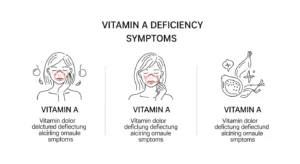
Symptoms of Vitamin A Deficiency
Lack of vitamin A can produce symptoms like dry eyes, blurry vision, dry skin and hair, itchy skin, broken fingernails, acne-like bumps. Advanced vitamin A deficiency can lead to poor bone growth, often misdiagnosed as hypothyroidism or zinc deficiency.
Risks
Too much vitamin A can also lead to rough skin and dry hair, but in place of other symptoms expect vitamin A-excess to show up as an enlarged liver, headache, bone and joint pain, hip fracture, or even cerebral edema (or water on the brain). This is because pure vitamin A, or retinol, is fat-soluble, stored in the liver and other tissue, and can build up to toxic proportions.
However, while too much vitamin A can be very dangerous, there is no such thing as too much beta-carotene, because the body processes only what it needs and eliminates the rest. With one exception: smokers should avoid high doses of vitamin A – as pure vitamin A or beta-carotene – since these have been linked with an increased risk of lung cancer.
